Wildfires (veld fires) don’t begin with dramatic flames racing across the landscape. They start quietly, with a single spark or ember, igniting dry grass, overgrown vegetation, or accumulated debris – all fuel just waiting for the right conditions. And while landowners know that the best firefighting tool is good preparation to reduce impact, nature still plays a powerful role. Lightning strikes can start them, while strong winds can drive their spread and increase the level of damage left behind.
But what follows once the last flame has been doused is just as critical as the firefight itself. Whether it’s a farm, reserve, agricultural holding or smallholding, the decisions made in the hours, days and weeks after a wildfire can influence the land’s recovery and resilience when the next fire season arrives.
Restoration extends well beyond the clean-up. It is widely recognised in land management practice as a long-term process, with full ecological and structural stabilisation often taking multiple seasons depending on the severity and conditions¹. As Divan Vermaak, Veld Management Specialist at Husqvarna, explains: “This process should be seen as an extension of good land management rather than the final stage of a wildfire event.”
Safety First
Emphasis now moves from emergency response to restoring the affected area to a safe, functional environment. “But before that takes place, a careful assessment of the affected area(s) should always be carried out to reduce risks and allow work to proceed safely,” advises Vermaak. “Such precautions are vital, as post‑fire environments still present ongoing dangers.”
According to the research, falling trees and branches are a major post-fire hazard. Burned root systems can remain precarious for weeks or even months, and infrastructure damage is often not visible beneath surface-level charring². “Using personal protective equipment (PPE) is therefore essential in such environments, particularly where ash, debris, and unstable vegetation remain,” he emphasises.
Clearing the Way
For landowners and managers, one of the critical priorities is restoring access. Fallen trees and scorched vegetation can block roads, farm tracks and boundary routes, making it difficult to reach critical infrastructure and delaying recovery efforts.
Removing these obstacles helps reconnect the property, allowing damage to be assessed, repairs to begin and essential operations to resume. It also restores access to farm infrastructure that may require immediate attention. But internal roads or tracks should be inspected first to ensure they are safe before deploying any heavy equipment.
In the immediate aftermath of a wildfire, safeguarding water systems and infrastructure is also vital. Rivers, dams, boreholes, and reservoirs should be checked for ash, sediment, or chemical contamination, and catchments protected against soil erosion and runoff to maintain clean water supplies.
At the same time, culverts, fences, power lines, and buildings need to be assessed for fire damage. Tackling these essentials, once conditions allow, ensures that recovery work can proceed safely and effectively.
When Green Returns
“Surprisingly, the land begins to green again rather quickly,” notes Vermaak. “This regrowth is a natural response, but if left unchecked, it can bring new challenges. Fire clears native vegetation and exposes bare soil. This creates ideal conditions for invasive species to establish rapidly, particularly along boundaries, roadsides and other disturbed areas, which can also alter the area’s biodiversity and ecosystem resilience³.
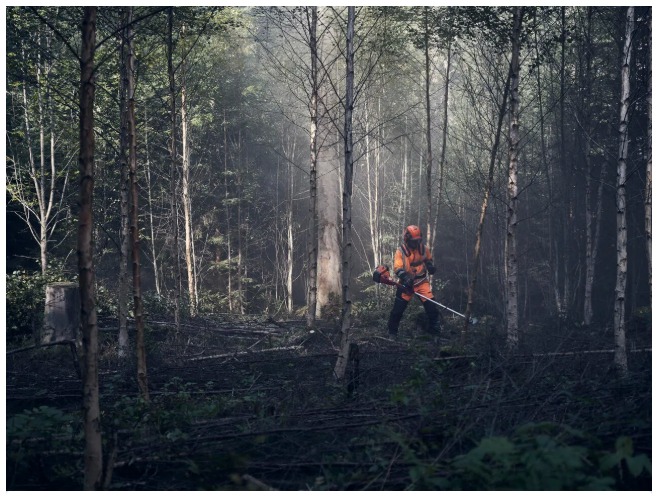
Managing it early with brushcutters or clearing saws keeps new growth from becoming too dense, maintaining visibility and reducing fire risk,” he adds. It also helps reduce soil erosion, promotes natural recovery, and limits the build-up of dry material that could fuel future fires in hot, dry conditions.
Each fire also teaches valuable lessons about how a property responds under pressure: where firebreaks held or proved inadequate, how wind and topography shaped the spread, where access was restricted, and where vegetation contributed to the fire’s intensity.
“Recovery doesn’t end when the clean-up is complete. It continues as the environment re-establishes itself and adapts. It is part of a continuous cycle of responsible land management that extends well beyond a single event. And by tackling hazards early and managing regeneration, landowners and managers can improve resilience for future fire seasons,” Vermaak concludes.
Need to equip your farm this fire season? See the full range of Husqvarna tools built for the job at https://www.husqvarna.com.