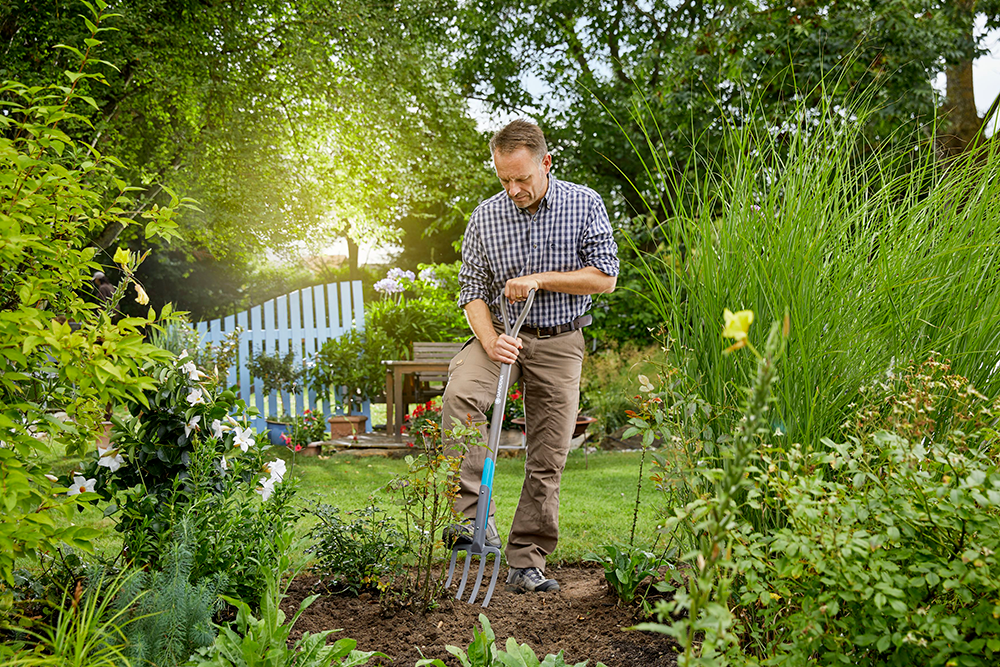
Spring has a way of bringing gardens back to life, and with it a patchwork of commonly held gardening beliefs gained from various sources: some timeless, some questionable. So, which of these ‘pearls of wisdom’ are true and which are just myth?
GARDENA South Africa takes a closer look to sort a few facts from fiction.
“The tricky thing about gardening myths is that their consequences aren’t always obvious,” says Fathima Mathen, Marketing Manager, GARDENA South Africa. “A practice may be repeated for years without us questioning whether it could be contributing to a problem we have been attributing to something else.”
She highlights five common myths and explains what the science tells us instead.
1. Watering in hot weather
Myth: The hotter the weather, the more often you should water. But if it’s rained, there’s no need to water.
Fact: Neither is a reliable rule for watering. Plants have different water requirements, and frequent, light watering can encourage shallow root systems. More established plants may benefit from deeper watering at longer intervals, while a heavy downpour can sometimes produce more runoff than moisture reaching the root zone.
Check the soil rather than relying solely on the weather or the calendar. If the soil is still moist below the surface, there’s no need to reach for the hose. If it is dry, water thoroughly enough to penetrate the root zone.
2. Leaf scorch
Myth: Water droplets sitting on leaves in hot sunshine act like tiny magnifying glasses and scorch the foliage.
Fact: This is a long-standing gardening belief, but the evidence does not support it. Water droplets do not focus sunlight strongly enough to scorch leaves.
The bigger issue when watering in hot conditions is evaporation. Early morning or late afternoon can be more efficient, while drip irrigation, such as GARDENA’s, delivers water directly to the soil around the roots, making timing less important.
3. Fallen leaves
Myth: Leaves should always be raked up.
Fact: Not necessarily. Leaves mown into fine pieces can decompose on a lawn and feed the soil. However, a very thick layer may need raking first, since mowing alone won’t always chop it small enough to prevent smothering.
4. Digging the soil
Myth: Digging soil is essential for improving its fertility.
Fact: Turning the soil with a spade or fork is not the only way to improve soil health and, in some circumstances, disturbing it can do more harm than good. Digging can disrupt earthworms, fungi and the soil structure that supports healthy plant growth.
A less disruptive approach is to add well-rotted organic matter to the surface and allow these organisms, along with roots and natural processes, to incorporate over time. This is the principle behind no-dig gardening, although the best approach will depend on the soil’s condition and intended use.
5. Grass clippings
Myth: Leaving grass clippings on the lawn causes thatch, a layer of undecomposed plant material that can build up between the grass and soil.
Fact: Grass clippings are not a significant cause of thatch. Short clippings are largely made up of water and readily degradable material, so they break down quickly and return nutrients to the lawn.
The emphasis here is on the word ‘short’. Clippings of about 2.5 cm or less can generally be left where they fall provided they are distributed evenly. Long, wet clippings can form clumps that shade and smother the grass underneath, so these should be removed or spread out.
Growing Wiser
“These are some of the most persistent myths we come across in the gardening space, and watering habits especially tend to be the reason people don’t get the results they’re hoping for,” notes Mathen.
“Ultimately, gardening is a learning curve, and while some gardening advice deserves a gold medal, some deserves quiet retirement. Knowing the difference often comes down to trial, error, and the occasional dead plant,” she concludes.
Because, in the end, it’s the garden that has the final word.
For more gardening inspiration or to view its product solutions, visit GARDENA SA at https://gardening.co.za.