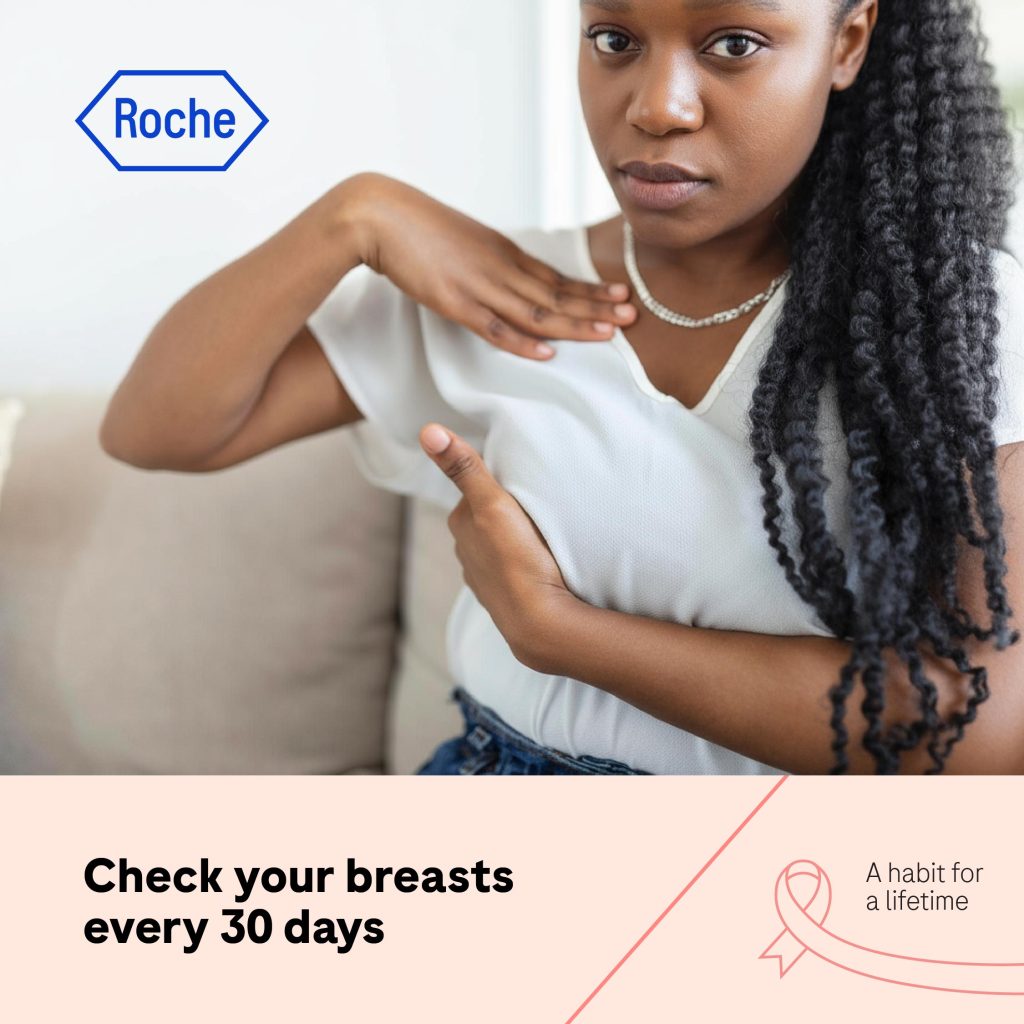
October may be Breast Cancer Awareness Month, but for many women, the message needs to last well beyond October. Roche is calling on women to treat breast self-exams as a lifelong habit, one that’s as routine as drinking water or applying sunscreen, encouragaging women to take five minutes every 30 days to check their breasts. The message is simple yet powerful: early detection can save lives, and forming this habit could be life changing.
See article below emphasising the critical role of early detection and how self-awareness can empower women to take control of their health.
Every habit has a why: Set your one life-changing 30-Day reminder
Ev
Most of us don’t think twice about the small things we do to maintain our health. We drink water because it keeps our bodies functioning as they should¹. We stretch or walk to shake off stiffness, apply sunscreen to protect our skin² and floss to prevent plaque³. These are simple routines that, for many of us, have become second nature – because each of them is justified by a sensible reason – a “why”.
However, one of the simplest, most meaningful habits is often left out of our monthly routines: checking our breasts every 30 days. It takes less than five minutes, yet it can be the difference between early detection and a late-stage diagnosis. And taking early action increases the chances of successful treatment.4
“Healthy habits are what keep us well, but not all habits are created equal,” saysKovashni Nair Ad, Interim Country Medical Director, Roche Pharma. “A breast self-check isn’t complicated, but it is deeply consequential. Early detection remains our most effective tool against breast cancer.” 4
A habit for a lifetime
Breast cancer was the most common cancer in women in 157 countries out of 185, according to WHO 2022 data.5 The hopeful truth is that when found early, the chances of survival rise dramatically – up to 99 percent if detected early – or in the localised stage (before it has spread) 6.
So, what do you need to look out for? Key warning signs include new lumps, dimpling, nipple changes or discharge7. The Breast Health Foundation encourages women to make “breast health habits” part of everyday self-care — checking once every 30 days and seeking medical advice if something feels different.8
“For so many of us who’ve faced breast cancer, early detection made all the difference,” says Jenna Skews, COO of the Breast Health Foundation. “Breast awareness is where it starts, but action is what changes lives. Checking your breasts every month is a small act with powerful impact — when you know your normal, you’re in a stronger position to notice when something changes. It’s a habit of hope, strength, and survival.”
Why “30 days” matters
Psychologists have found that it takes steady repetition – usually a few weeks to a couple of months – for a new behaviour to become second nature. Aligning your self-check with a familiar cue – like your monthly cycle, a calendar reminder or even the first day of the month – may help you make it automatic. 9 This is sometimes described as “habit stacking”; when paired with a specific trigger, the act becomes easier to maintain. Over time, it stops being something you remember to do and becomes something you simply do – building a rhythm that helps you listen to your body and make self-care a predictable part of your life.10
Every habit has a “why”
Habits last because they mean something. We hydrate to feel better, move to stay strong and protect our skin for the years ahead. Checking your breasts every 30 days is another expression of that same self-care – one driven by love, family and the desire to live a happy, fulfilling life.
When one woman builds this habit, it has a ripple effect. Early detection can save a life, preserve the heartbeat of a household, a community and a future. And while breast cancer affects women from every walk of life, timely action remains the great equaliser. The sooner you are diagnosed, the better – no matter who you are or where you live.11
A habit worth keeping
Healthy living always matters – many of the habits we have mentioned as examples, may, in fact, reduce your risk of breast cancer. For example, regular exercise, balanced nutrition, and limiting alcohol are all proven ways to reduce the risk of breast cancer¹². But even the most disciplined lifestyle can’t replace the value of early detection.11
The simple act of taking five minutes once a month can make all the difference. Make it a gesture of awareness, strength and continuity – a small promise you keep with yourself to prioritise your best interests.
Because every habit has a why, and this one could save your life.