As tensions between Iran and the US continue to unsettle global oil markets, the effects are being felt far beyond the Middle East. The threat to supply routes through the Strait of Hormuz has kept energy markets on edge, and that pressure is now feeding directly into the fuel conversation in South Africa.
Brent crude has swung sharply on each new development, while reporting based on Central Energy Fund data has pointed to the risk of another steep fuel-price increase in April, including scenarios in which some grades could move beyond R25/litre if current pressure persists. Gauteng 95 ULP is already at R20.30/litre, underlining just how exposed motorists are to further price shocks.
That matters because for most consumers, the real cost of running a vehicle is not just the monthly instalment, but what the vehicle costs to keep moving. In that context, things like range and tank size become a secondary consideration. The more useful question is not how far a vehicle can go in ideal conditions, but what it costs to run in everyday use.
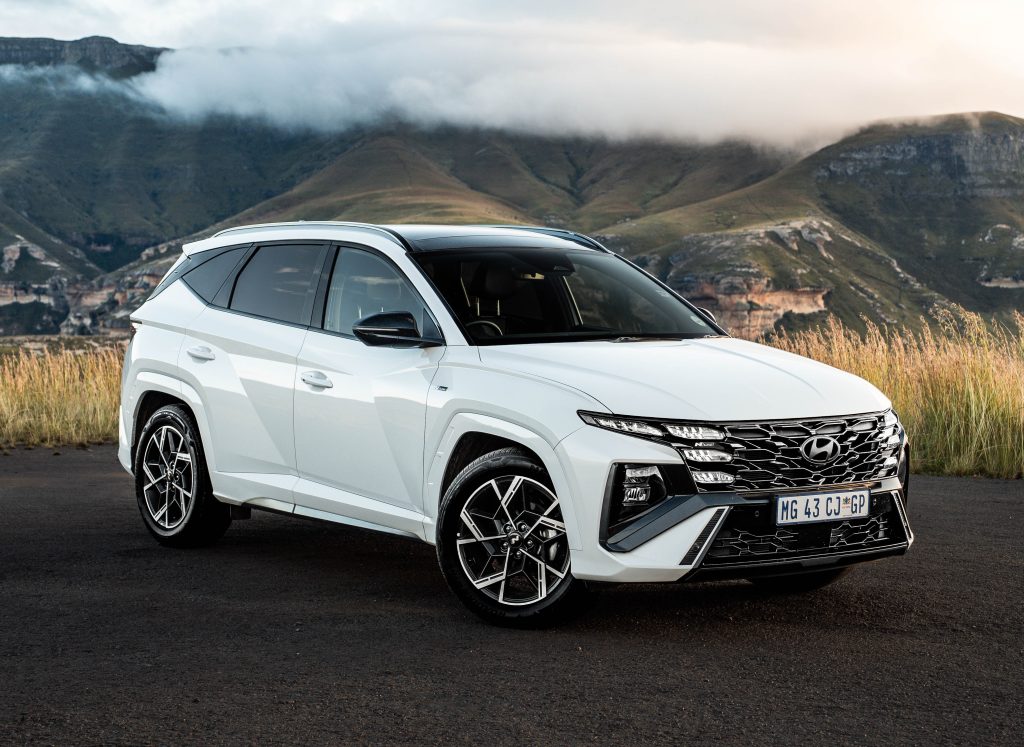
A comparison between three family vehicles, the petrol-powered Toyota RAV4 2.0 GX-R AWD, the diesel Hyundai Tucson 2.0D Executive, and the plug-in hybrid JAECOO J7 SHS, highlights the differences in running costs between two traditional fuel sources and an electrified vehicle.
Using their quoted combined fuel-consumption figures, the Toyota comes in at 6.7L/100km, the Hyundai at 7.4L/100km, and the JAECOO at 4.7L/100km (with a fully charged battery, the Chinese manufacturer claims a fuel-use figure of 1.0L/100 km). Apply current Gauteng fuel prices of R20.19/litre for 95 ULP and R18.60/litre for diesel, and the Toyota works out to about R135.27 per 100km, the Hyundai to about R137.64 per 100km, and the JAECOO to about R94.89 per 100km.
That already changes the comparison slightly. On fuel cost alone, the petrol RAV4 and diesel Tucson are very close, despite taking different routes to get there. The J7 SHS returns the lowest calculated fuel cost in this comparison, coming in at roughly R40.38 less than the Toyota and R42.75 less than the Hyundai for every 100km driven.
On that basis, on a Johannesburg to Durban return run, the JAECOO saves around R457 compared with the Toyota and about R484 compared with the Hyundai.
This also highlights where plug-in hybrids fit in the current market. They sit between conventional petrol or diesel vehicles and full EVs, offering lower fuel consumption than a traditional internal-combustion vehicle without relying entirely on public charging infrastructure. The J7 SHS records the lowest quoted fuel cost in this comparison, but the broader point is that PHEVs can become more relevant when fuel prices are under pressure.
That said, their efficiency advantage depends heavily on how they are used. To achieve the best fuel-consumption figures, the battery needs to be charged regularly, and that means electricity costs also form part of the running-cost equation. Even so, for buyers who can keep a PHEV charged as intended, lower fuel consumption remains part of the appeal.
| Vehicle | Fuel type | Price | Combined fuel consumption (claimed) | Fuel price | Cost per 100 km |
| Hyundai Tucson 2.0D Executive | Diesel | R709,900 | 7.4L/100 km | R18.60/litre | R137.64 |
| JAECOO J7 SHS | Plug-in petrol hybrid | R689,900 | 4.7L/100 km | R20.19/litre | R94.89 |
| Toyota RAV4 2.0 GX-R AWD | Petrol | R719,800 | 6.7L/100 km | R20.19/litre | R135.27 |
Sources: