This is my fourth Mission Report since I became Deputy Minister of Water and Sanitation. My mission is Clean Water and Dignified Sanitation.
I visited three provinces in October — Eastern Cape, North West, and the Free State — and flew in a helicopter over the polluted rivers feeding Hartbeespoort Dam. The report highlights my continuing push for accountability on pollution and water failures. I look for innovative solutions that benefit everyone, such as tax incentives for water conservation, and using the savings from stopping leaks to fund the replacement of old pipes.
Aerial oversight of Hartbeespoort catchment
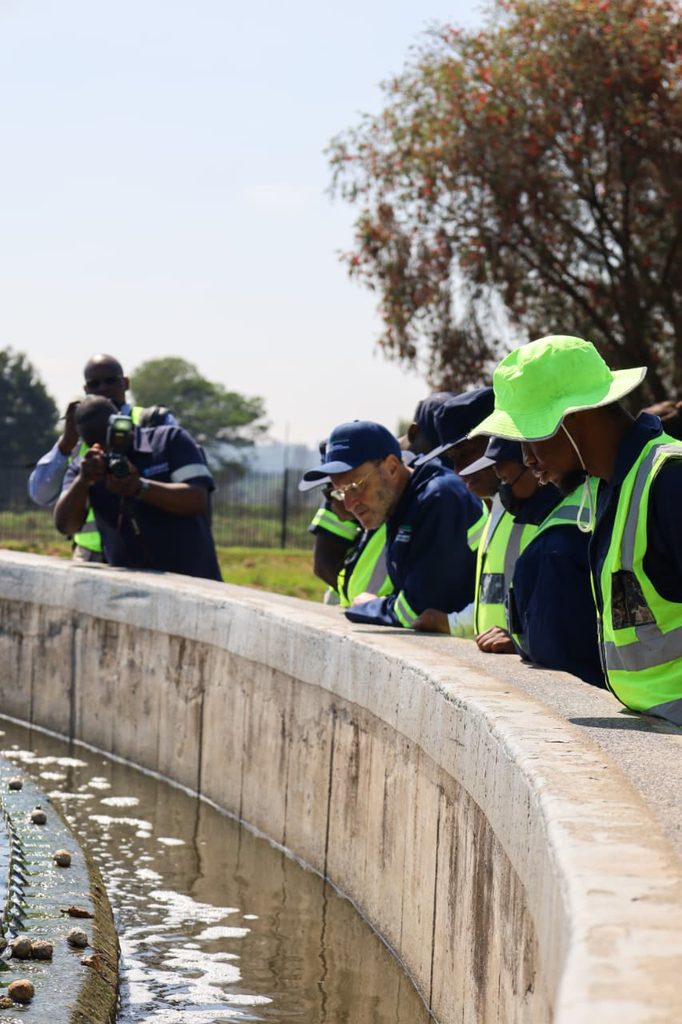
I saw unnatural foaming, long stretches of murky water, and widespread illegal dumping along the Kaalspruit, Jukskei, Hennops and Crocodile rivers. They lead into the Hartbeespoort Dam, which is covered by green blankets of water hyacinth and salvinia. We need to stop the sources of the pollution, mainly the failing municipal wastewater treatment plants. Local action at hotspots can start eating this giant problem one bite at a time.
A dam and rain-harvesting in Eastern Cape
It was exciting to be in rural Eastern Cape to see the building of the seventh-largest dam in South Africa as part of the Mzimvubu water project. It will create jobs on a massive scale. Meanwhile, I noticed all the household rain-harvesting systems in the area. We need to encourage this in cities with tax incentives, just as household solar incentives helped ease the electricity shortage.
Mangaung wastewater crisis
Eleven of Mangaung’s 13 wastewater treatment plants are in poor or critical condition. Criminal charges have been laid against the Sterkwater and Botshabelo plants for spewing sewage into rivers. I saw the critical need for armed security as they need to be rebuilt after damage caused by vandalism and theft. Skilled technicians must be recruited to fill the high vacancies.
I hope to get all stakeholders together to upgrade the abandoned Heidedal Quarry into a safe recreational lake instead of a perilous area where children have drowned.
Vandalism in the North West
Vandalism is also the main cause of breakdowns in treatment plants in North West province. I saw bullet holes at the Klerksdorp Wastewater Treatment Works where Zama Zamas stole cables and burnt the transformer. Overnight, an expensive plant can be made useless.
Pump stations in Rustenburg and Ventersdorp have also been damaged by theft. It adds to the pollution that has led to criminal charges. I emphasised the need for early warning prevention measures and called for rehabilitation of the Hex and Schoonspruit rivers as part of the polluter pays principle.
Ventersdorp’s water and sanitation infrastructure is woefully inadequate for a growing population, and they run short of water when Eskom power supply fails. I promised to assist them.
Criminal charges against Ekurhuleni
I was with officials who laid criminal charges against Ekurhuleni because their Hartebeesfontein Wastewater Treatment Works discharges sewage into the Rietvlei Dam. The Rietvlei treatment plant used to supply water to Tshwane, but it was shut down a year ago as the dam water has too much ammonia.
Accountability is needed when one city pollutes the drinking water of another city. There is also no excuse for endangering lives by not chlorinating water as happened at Bronkhorstspruit.
Kaalspruit litter trap
I opened the innovative litter traps installed by Willem Snyman of FreshNGO at the Kaalspruit in Olifantsfontein. They catch plastic and other waste before it flows into the Hennops River and Hartbeespoort Dam, and they need regular emptying and community partners to remain effective.
New housing without water
I am distressed by new housing projects without proper water infrastructure. In Tshing Extension 10, Ventersdorp, residents walk 800 metres for water. At the Dan Tloome development in Randfontein, 10 000 residents haven’t had indoor water for four months and they queue for hours at a few taps.
The high cost of leaking pipes
I highlighted the high cost of leaking pipes in Gauteng, while many residents suffer from water cut-offs. Gauteng wastes 431 billion litres a year – roughly 27% of all treated water and the same amount supplied annually to the Western Cape. At municipal rates this is more than R14 billion in lost revenue each year. I proposed a way to FIX THE LEAKS by using a Digital Water Register so banks can use future savings to fund the large-scale replacement of old pipes.
Global handwashing day
I celebrated Global Handwashing Day by visiting Kido’s Educare Centre in Protea South, Soweto, where Principal Julia Maseko teaches young children that clean hands save lives. Washing hands with soap prevents transmission of many illnesses.
Innovation and partnerships
At the University of Johannesburg’s Centre for Ecological Intelligence I saw drip irrigation, closed-loop aquaponics, ecotoilets, and fertiliser made from food waste. At the Lonehill Dam in Fourways, Johannesburg, oxygen nanobubbles are rejuvenating the water.
I look out for inspiring people like Gerrie Brink who is partnering with FNB to assist schools in cutting their water bills dramatically. I’ve met property groups who make their shopping centres and housing developments water efficient.
WE CAN beat our water crisis through innovation and partnerships