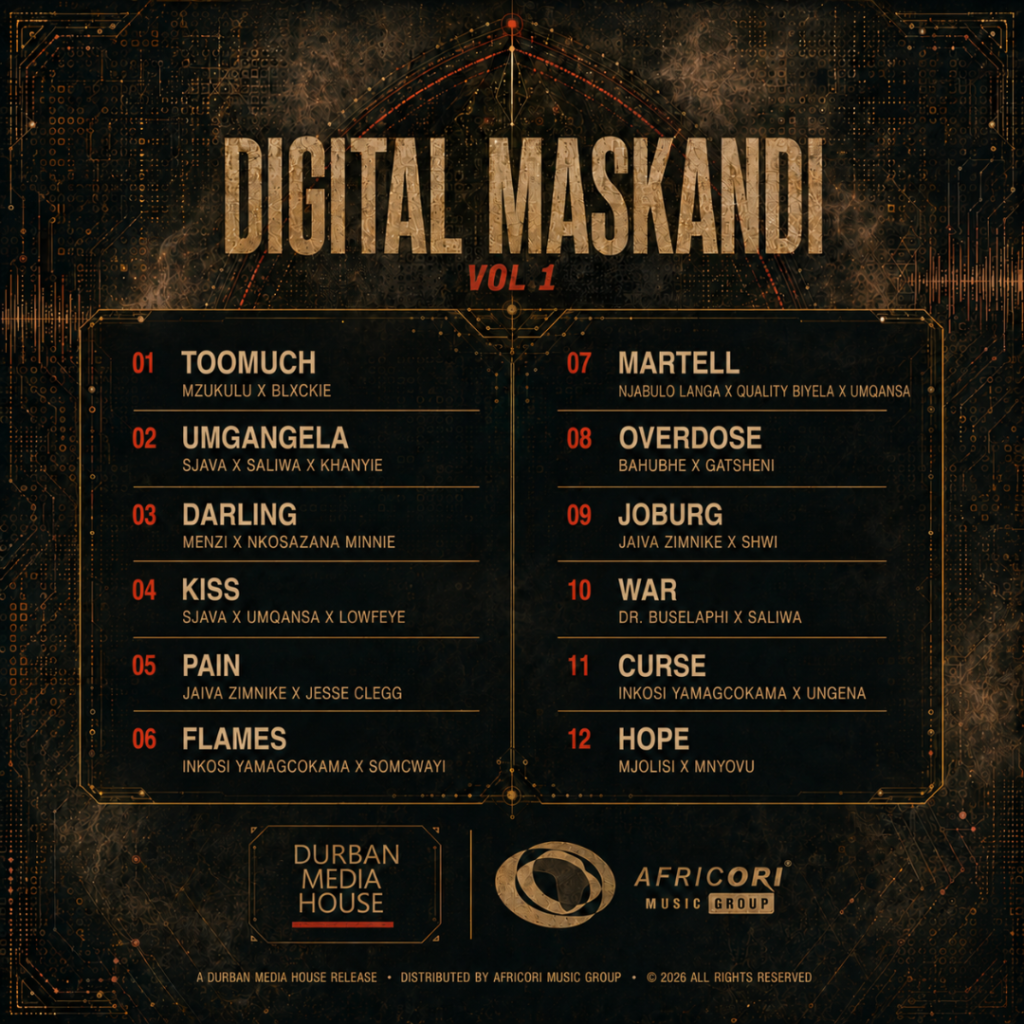
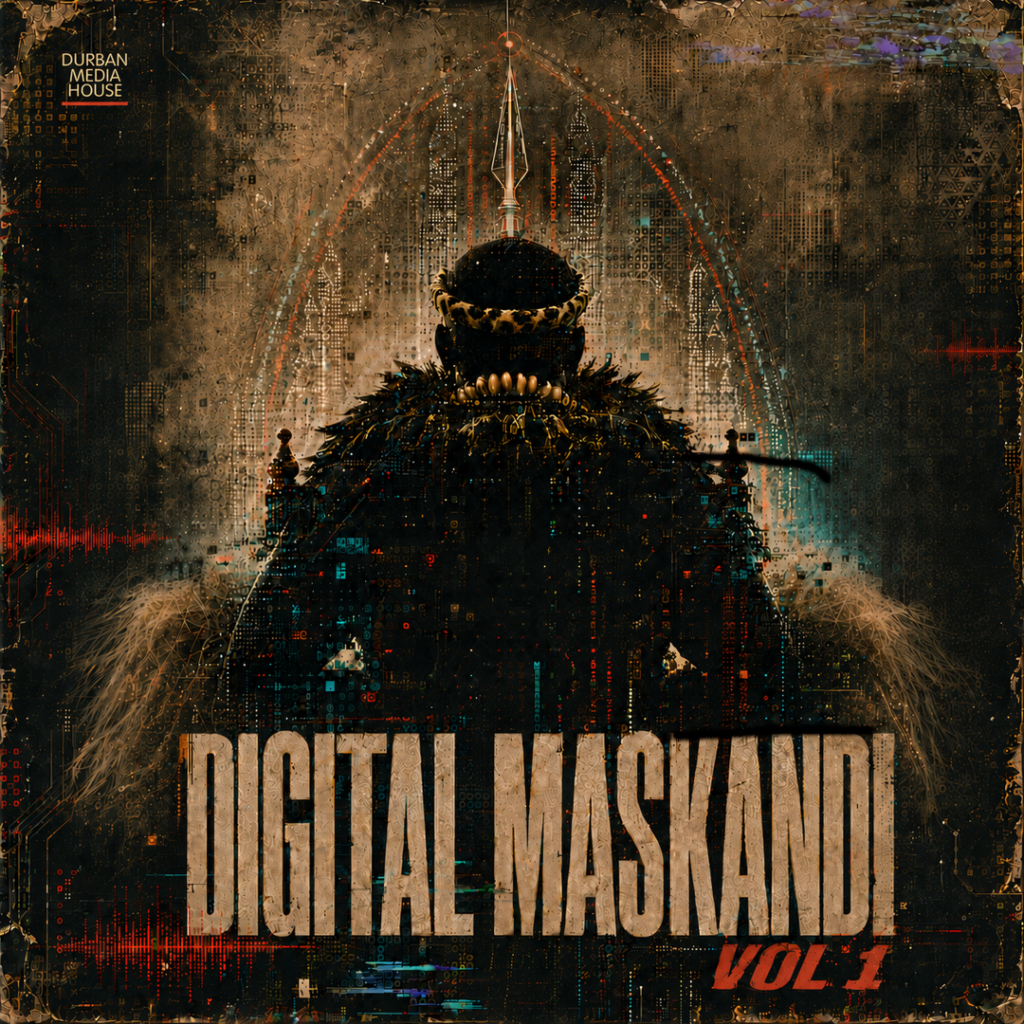
Following a month-long introduction through a series of cross-cultural collaborations, Durban Media House and Africori Music Group today release Digital Maskandi Vol. 1, a first-of-its-kind unity project bringing together legends, established stars and emerging voices from across South Africa.
Built around collaboration, cultural pride and musical progression, Digital Maskandi Vol. 1 asks what can happen when one of South Africa’s most deeply rooted musical traditions enters into conversation with the sounds and communities surrounding it. The project features seasoned voices alongside newcomers; the contributors include Mzukulu, Blxckie, Sjava, Saliwa, Khanyie, Jaiva Zimnike, Jesse Clegg, Somcwayi, Scebi “Inkosi Yamagcokama” Dlamini, Njabulo Langa, Umqansa, Quality Biyela, Dr Buselaphi, Menzi, Lowfeye (The Qwellers).
The compilation connects Maskandi with hip-hop, pop, Xigaza and other contemporary South African sounds, while keeping the guitar, lyricism and storytelling at the heart of the genre firmly intact. Each collaboration celebrates a different part of the country’s musical identity, bringing together artists across generations, regions and genres while opening new pathways for Maskandi to reach a new generation.
The ambition is to respect the foundations, then see where they can go.
Leading the full project on release is focus track “Martell,” bringing together Njabulo Langa, Umqansa and Quality Biyela. The collaboration places three distinct voices within the wider Digital Maskandi vision, continuing the compilation’s commitment to creating unexpected connections while keeping Maskandi firmly at its centre.
Across Digital Maskandi Vol. 1, established artists share space with younger voices, regional sounds meet national influences and traditional storytelling moves through contemporary production without losing its identity. The result is a bold statement of unity, culture and the future of African music, rooted in the belief that progression and preservation do not have to exist at opposite ends of the spectrum.
The road to the full compilation began on 11 September with “Too Much,” pairing newly crowned SAMA Best Male Artist of the Year Mzukulu with South African hip-hop star Blxckie. Mzukulu’s rich, soulful voice meets Blxckie’s unmistakable raw edge over classic Maskandi guitar leads, Spanish guitar influences and a seductive saxophone melody. As the first introduction to Digital Maskandi, “Too Much” established the project’s intention immediately: artists from seemingly different musical worlds finding common ground without sacrificing what makes either distinct.
That idea expanded further with “Umgangela,” bringing together Sjava, Saliwa and rising Giyani talent Khanyie. What begins as a spirited Maskandi exchange about friendship, loyalty, culture and love takes an electrifying turn with Khanyie’s arrival. The rhythms and commanding energy of Xitsonga disco (Xigaza) transform the track into a joyful meeting between Zulu tradition and contemporary Limpopo sound.
On “Pain,” Jaiva Zimnike and Jesse Clegg explore a different kind of connection. The song speaks to the emptiness left by losing someone we love, whether a child, parent, family member or close friend. Jaiva Zimnike carries that grief through the emotional directness of Maskandi, while Clegg’s vocals push the record into an almost spiritual space, as though reaching beyond this world towards those no longer with us. Together, they turn personal grief into a meditation on love, memory and learning to carry a pain that never entirely disappears.
“Flames” brings another dimension to the compilation. The upbeat Maskandi love song features the late Scebi “Inkosi Yamagcokama” Dlamini in one of his final recordings before his untimely passing, giving his contribution particular weight and meaning. Alongside him, Somcwayi draws from the guitar-driven foundations of contemporary Maskandi, bringing his acoustic musicianship into the track’s smoother, R&B-influenced sound. Together, they capture a romance that has moved
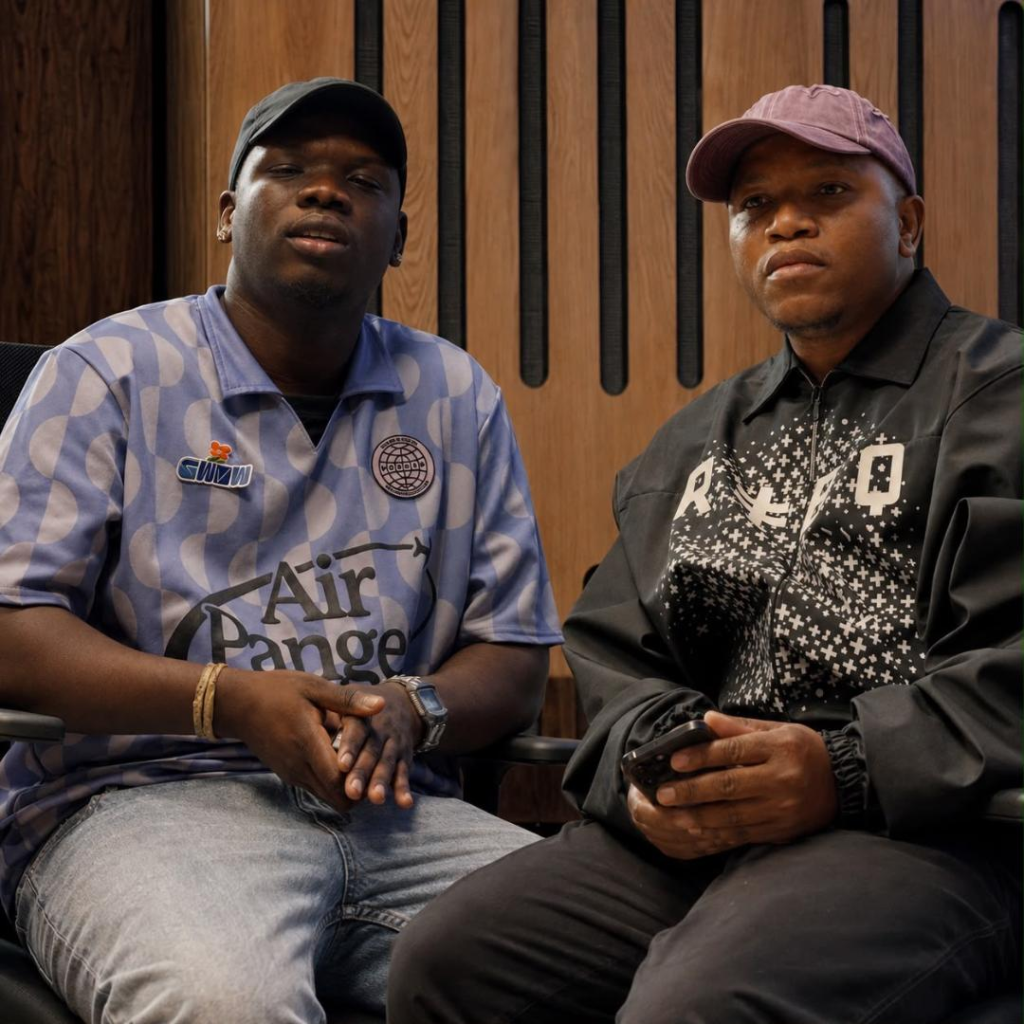
far beyond its initial spark: intense, dangerous and completely on fire.
Together, the singles have gradually revealed the scale of Digital Maskandi Vol. 1. Rather than treating fusion as a novelty, the project uses each collaboration to find genuine points of connection between South African musical traditions. Hip-hop can sit alongside Maskandi guitar. Xigaza can enter a Zulu cultural story. Alternative and pop voices can carry the emotional language of Maskandi into different spaces.
At the centre of the project is an idea developed by Ntuthuko Mtshali, born from years spent working closely with the Maskandi community and building platforms for its artists.
Over the past five years, Mtshali’s work within the culture has contributed to three South African Music Awards, including two Record of the Year wins and one Music Video of the Year award. Those achievements helped plant the seed for an undertaking on a larger scale: a compilation capable of bringing different generations and communities together around Maskandi while giving artists the freedom to explore beyond conventional genre boundaries.
The wider project brings together respected Maskandi voices including Mzukulu, Dr Buselaphi, Saliwa, and Menzi, alongside artists representing different corners of contemporary South African music. Sjava brings his singular meeting point of African soul, hip-hop and indigenous storytelling. Blxckie carries the melodic instinct and attitude of contemporary South African hip-hop, while Lowfeye of The Qwellers represents an emerging generation shaped by internet culture, the streets and an increasingly fluid relationship with genre.
The differences between these artists are precisely the point.
Digital Maskandi Vol. 1 uses those differences to create connection, recognising Maskandi not as a sound that needs to be preserved behind glass, but as a living South African cultural force capable of moving between generations, regions and genres while remaining rooted in its identity.
With the full compilation now available, Digital Maskandi Vol. 1 presents a vision of South African music in which tradition and experimentation strengthen one another, and where the future can be built by bringing the country’s many musical identities into the same conversation.