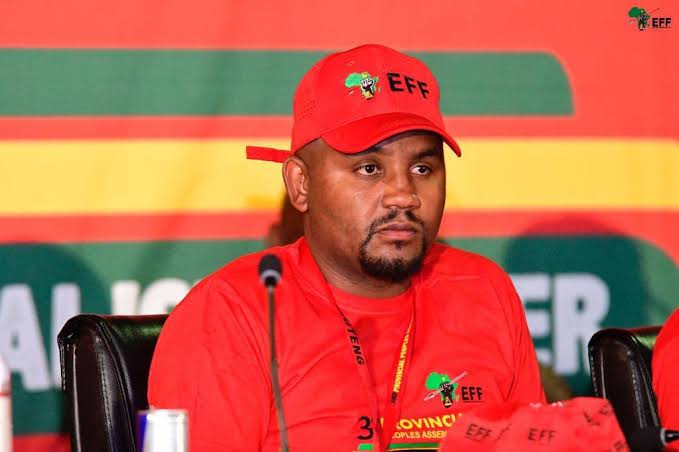
Gauteng MEC for Finance, Honourable Nkululeko Dunga, has outlined progress
on priorities in the 100 Days Programme, including paying suppliers and
stabilising municipal finances.
Responding to Legislature questions today, the MEC said paying suppliers on
time is both a legislative requirement and a moral imperative. It supports SMMEs,
sustains economic activity and strengthens public trust in government. The
Invoice Management System remains central to the Province’s efforts to achieve
and sustain 30-day payment compliance.
Since the Unpaid Service Providers Imbizo held on 9 July 2026, R86 885 317,53
has been paid to service providers who logged queries. The outstanding balance
is R83 670 488,73, comprising GDoH invoices of R79 868 247,21 and GDID
invoices of R3 802 241,52. All outstanding GDE invoices, amounting to R60 400
836,68, have been settled. Work continues to finalise the remaining unpaid
invoices arising from queries recorded at the Imbizo.
Own provincial revenue represents 5% of the Provincial Budget, but remains
important for funding priorities as transfers from National Government decline.
The Province must accelerate revenue-enhancement initiatives, including
finalising the overdue amendment to the Gauteng Gambling Act. This will enable
The Province to collect revenue from online gambling, a growing source for which
no provincial legislative collection mechanism has been established.
The Department is implementing technology to close revenue leakages and
continues to engage National Government on the resources required by the fastgrowing province. To address non-surrender and partial surrender of revenue by
municipalities, it is engaging municipalities to secure payment of withheld
revenue. It is also reviewing municipal agency processes to strengthen them and
prevent non-surrender of revenue collected by agencies.
The Province is also advancing Public-Private Partnerships (PPPs) as part of its
revenue-enhancement and infrastructure delivery strategy. PPPs allow the
Province to draw on private sector capital and expertise to accelerate
infrastructure projects that the fiscus alone cannot fund at the pace required.
Provincial Treasury is working to ensure PPP proposals brought forward are
structured at a scale commensurate with the Province’s actual infrastructure and
revenue needs, rather than piecemeal arrangements that fall short of addressing
the scale of the challenge, with a clear intention of transferring the infrastructure
to the operation of the province in future.
Gauteng Provincial Treasury monitored municipalities’ preparation of their
2026/27 Medium Term Revenue and Expenditure Framework budgets. All 11
municipalities adopted budgets before the start of the financial year, as
legislation requires. However, some adopted unfunded budgets, which remain
the Province’s challenge.
Only five municipalities adopted funded budgets: the Cities of Johannesburg,
Ekurhuleni and Tshwane, Mogale City Local Municipality, and Midvaal Local
Municipality. The remaining municipalities adopted unfunded budgets, creating
a risk that revenue may not cover expenditure commitments or enable full
delivery of priorities.
Provincial Treasury issued a revised framework to help municipalities comply.
Plans must set out strategies for financial stability, address critical community
needs, foster sustainable growth, prioritise efficient resource allocation,
maximise revenue generation and maintain fiscal stability. Most submitted plans
meet these requirements. Treasury monitors implementation monthly, provides
written feedback and recommendations, and remains available to support
municipalities.
Since 1 April 2026, the Gauteng Provincial Government has implemented budget
and procurement reforms to strengthen financial discipline, improve governance
and safeguard public resources. A reform is budget blocking: an automated
control that validates budget availability before procurement transactions are
approved or processed.