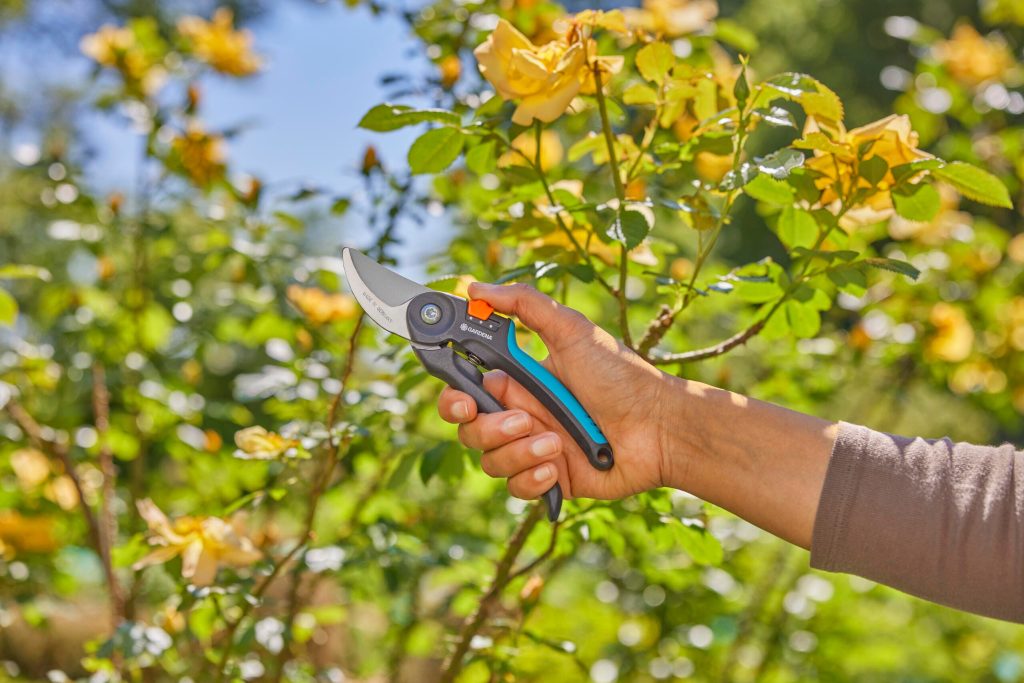
Winter may be a garden’s quiet season, but it’s also one of the best times to grab the secateurs. With sap flow slowed and deciduous trees stripped bare, it’s far easier to see plant structure and make confident cuts rather than guess. It also places less stress on plants and lowers the risk of disease entering fresh wounds.
Fathima Mathen, Marketing Manager for GARDENA, says the trick is knowing what needs attention now and what’s better off waiting until the weather warms or flowering ends. “Winter pruning isn’t about cutting everything back. It’s about understanding what needs a hard prune, what only needs light shaping or selective cutting, and what should simply be left alone,” she explains.
Mathen shares a simple guide to some common plants that benefit from a winter ‘haircut’ and those that don’t:
What to prune
- Roses (hard prune)
Winter is rose-pruning season. Cut stems back to healthy outward-facing buds, remove dead or diseased wood, and dispose of infected material to help reduce disease risk.
- Deciduous fruit trees (hard prune)
Apples, pears, peaches, nectarines and plums all benefit from winter pruning. Apricots should be treated more lightly. Focus on removing dead, damaged and overcrowded branches to improve airflow, light and future fruiting.
- Grapevines (hard prune)
A thorough winter pruning keeps your vines productive and encourages strong, healthy new growth for the season ahead.
- Summer-flowering shrubs (light to moderate prune)
Plumbago, buddleja and ribbon bush can be cut back now to encourage vigorous new growth and better flowering later in the season. Bougainvillea can also be lightly shaped in frost-free coastal areas, but in colder inland regions it’s best to wait until the risk of frost has passed. Honeysuckle can be trimmed back if overgrown, although it responds best to pruning after flowering. Think “tidying and light shaping,” for these two, not hard pruning.
- Deciduous ornamental trees (selective prune)
Trees such as Japanese maples, plane trees and liquidambars are easier to shape in winter. Without leaves, it’s simpler to remove crossing or rubbing branches and improve structure without overcutting.
What to leave alone (because not everything enjoys a winter chop)
- Spring-flowering shrubs
Azaleas, camellias and flowering quince already form their flower buds ahead of spring, so winter pruning would reduce their display. Wait until after flowering.
- Spring-flowering trees
Magnolias and flowering cherries should only be pruned once they have finished blooming, if shaping is needed.
- Hydrangeas
Most common hydrangeas flower on wood formed the previous season, so cutting them back in winter can reduce summer blooms. Only remove dead wood now and wait until after flowering to prune properly.
- Frost-sensitive evergreens
Gardenia and murraya are best left unpruned in winter, as cold snaps can easily damage fresh growth.
Hold off on frost damage
Blackened or wilted foliage after a cold snap may look unsightly, but don’t be too quick to tidy it up. That damaged growth often helps protect the healthy plant underneath. It’s best to wait until the risk of frost has passed before cutting it back.
Tools and technique matter too
Mathen adds that winter pruning is as much about good technique as good timing. “Always use clean, sharp secateurs or loppers for precise cuts that heal quickly,” she says, noting that clean cuts close faster while torn or crushed stems can slow down recovery and leave plants more vulnerable to disease. “Remember to also disinfect your tools after pruning diseased plants to help prevent spreading problems through the garden,” she advises.
A little thoughtful pruning now: knowing what to cut, what to shape, and what to leave, will reward you with stronger growth, healthier plants and a garden that wakes up beautifully in spring
And whatever you’re pruning, sharp tools make the job easier and the plant’s recovery faster, a reminder of why good-quality tools like GARDENA’s matter in the garden.